Vera Flores · 21 October 2026
School-Business Partnerships Expand Career Pathways for Local Students
School-business partnerships have gained traction across many communities as educators and employers work together to align classroom learning with real workplace demands, and Glenhaven has become one such location where these collaborations shape student trajectories in measurable ways. Data from the National Center for Education Statistics shows that districts with active business ties report higher rates of students entering postsecondary programs or direct employment within six months of graduation, while figures from the OECD indicate similar patterns in regions that prioritize structured work-based learning experiences.
Partnership Models in Practice
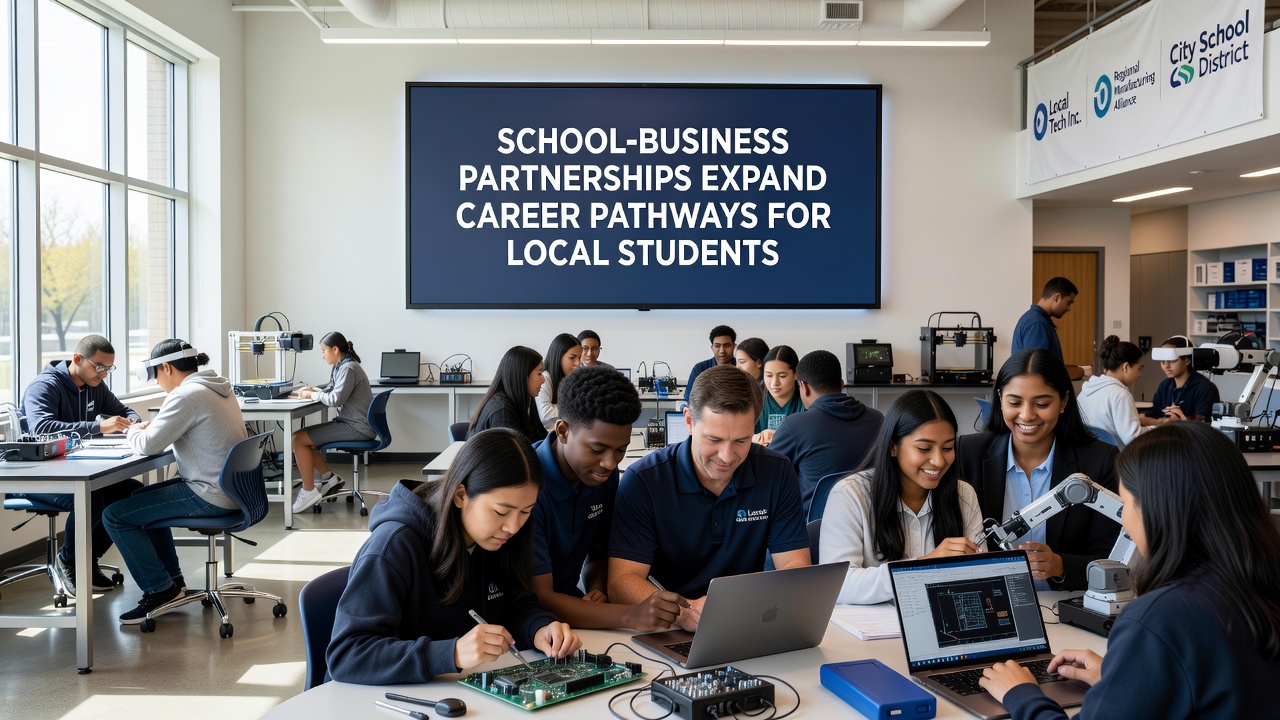
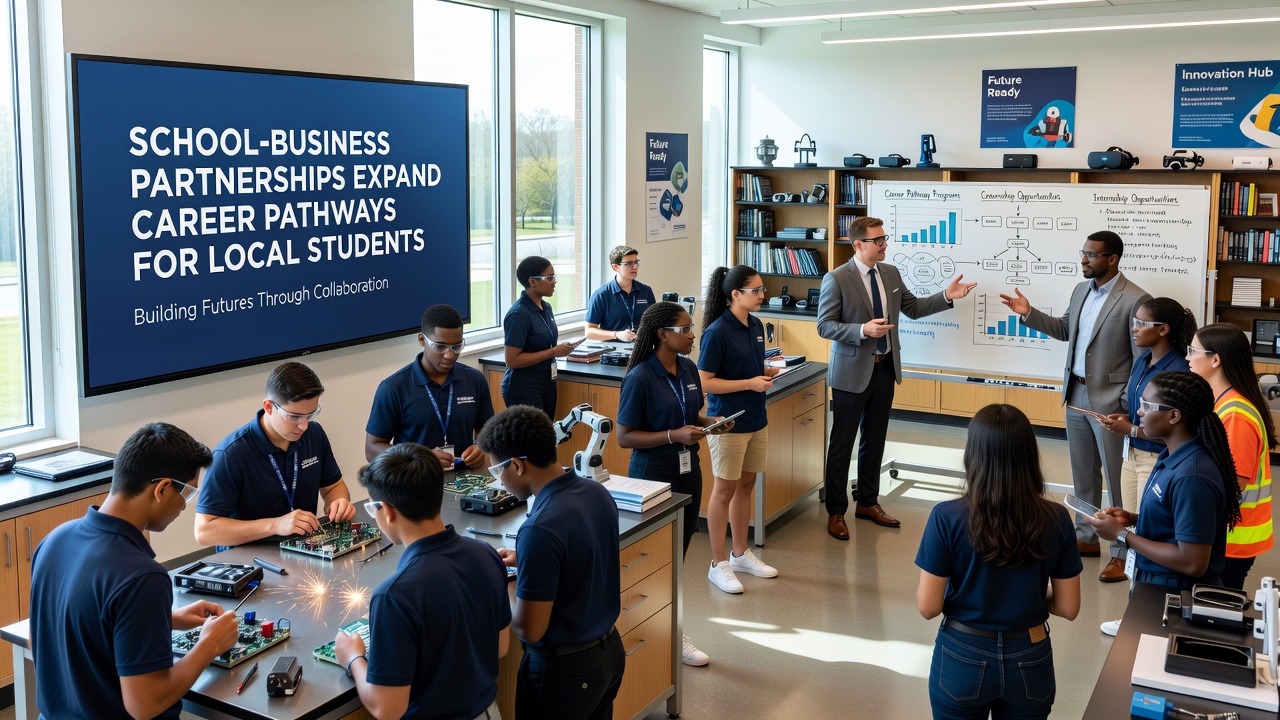
Local schools coordinate with companies in manufacturing, healthcare, technology, and agriculture to create pathways that include apprenticeships, paid internships, and classroom projects tied to industry standards, and these arrangements often begin in middle school before students select specialized tracks in high school. One program pairs juniors with engineering firms for semester-long projects that count toward both academic credit and professional portfolios, whereas another connects seniors in health sciences with hospital rotations that lead to certified nursing assistant credentials. Researchers at the University of Toronto documented comparable outcomes in Canadian districts where such rotations increased credential attainment by 18 percent over three years.
October 2026 Developments
In October 2026 Glenhaven schools launched an expanded initiative with regional employers that added virtual reality simulations for logistics and supply-chain careers, and preliminary enrollment data revealed over 200 students signing up within the first month. This addition built on existing agreements that already placed students in summer roles at distribution centers, where supervisors tracked skill development through standardized checklists shared with teachers. Education authorities in Australia have reported parallel growth in similar virtual training modules, noting reduced dropout rates among participants who combined simulated and on-site experiences.
Measuring Impact Through Data
Tracking systems now capture metrics such as internship completion rates, certification numbers, and post-graduation employment status, allowing administrators to adjust offerings based on employer feedback and student performance records. A 2025 report from the European Centre for the Development of Vocational Training highlighted that regions maintaining shared data platforms between schools and businesses saw a 12 percent rise in youth employment within targeted sectors. Glenhaven adopted elements of those platforms last year, and early indicators point to increased retention among students who began pathways in ninth grade rather than waiting until later years.
Role of Community Organizations
Nonprofit intermediaries often facilitate matching processes, provide transportation stipends, and host networking events that connect students with mentors from participating companies, and these groups also train teachers on current industry tools so classroom instruction stays relevant. Observers note that such support networks reduce logistical barriers that previously limited participation from students in rural parts of the district. Partnerships with local chambers of commerce have further extended reach by recruiting smaller businesses that might otherwise lack resources to host interns independently.
Challenges and Adjustments
Alignment between academic calendars and business cycles remains an ongoing task, since employers sometimes need workers during periods when students attend classes, yet many sites now offer flexible scheduling and remote options to bridge those gaps. Transportation access and liability coverage also require coordination, and districts have responded by securing additional insurance riders and partnering with transit authorities for dedicated routes. Data from Statistics Canada shows that communities addressing these logistical elements early achieved higher sustained enrollment in pathway programs compared with those that did not.
Conclusion
School-business partnerships continue to evolve as more stakeholders recognize their contribution to preparing students for available jobs, and Glenhaven's experience illustrates how structured collaborations can translate into concrete credentials and employment connections. Ongoing evaluation by participating schools and companies will determine which elements expand further in coming years, while data from multiple countries suggests that sustained investment in these models correlates with improved youth labor-market outcomes.