Avery Russell · 4 November 2026
Glenhaven Volunteers Digitize Decades of Local Oral Histories for Online Archive
Residents in Glenhaven have launched a volunteer-driven project that converts decades of local oral histories into digital formats for a public online archive, and the effort draws on recordings collected since the 1950s that capture community stories, local events, and personal accounts from long-time residents.
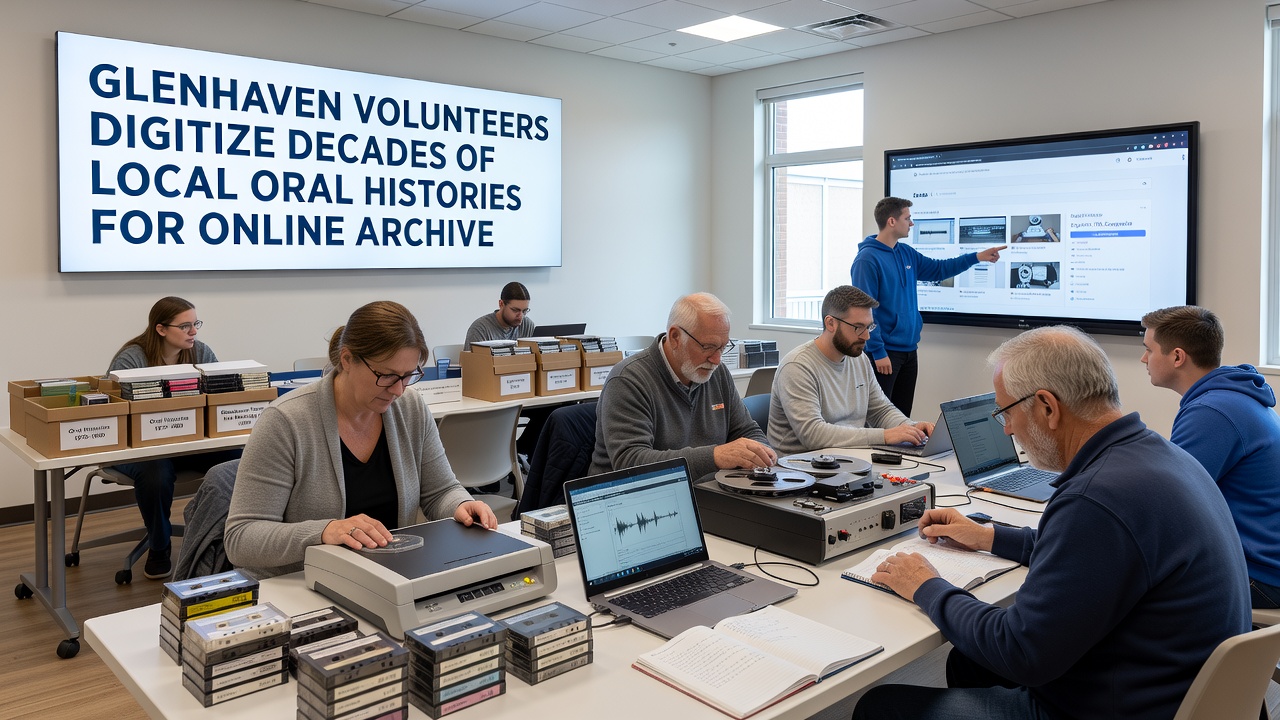
Volunteers began the work in early 2025 after community groups identified a collection of cassette tapes, reel-to-reel recordings, and handwritten transcripts stored in local libraries and historical society basements, while the group coordinated through monthly meetings at the Glenhaven Community Center to establish scanning protocols and metadata standards that match established archival practices.
Project Background and Scope
The recordings include interviews with early settlers describing the town's agricultural roots, accounts from veterans of mid-century conflicts, and narratives from families who witnessed industrial changes along the regional river corridor, and organizers report that the collection spans more than 400 individual sessions totaling roughly 1,200 hours of audio.
Local historical society records indicate the original collection started with a 1957 initiative by the Glenhaven Historical Association, and subsequent donations from schools and churches added material through the 1990s before storage conditions led to gradual deterioration of some physical media.
Digitization Process and Equipment
Teams use portable audio interfaces connected to computers running open-source software to transfer analog signals while volunteers monitor levels to minimize distortion, and they clean tape heads between sessions to maintain consistent playback quality across batches of material that vary in condition.
Each file receives standardized metadata that includes speaker names where available, approximate recording dates, geographic references, and thematic keywords, and this information follows guidelines developed by the American Folklife Center so the resulting records remain compatible with larger national databases.
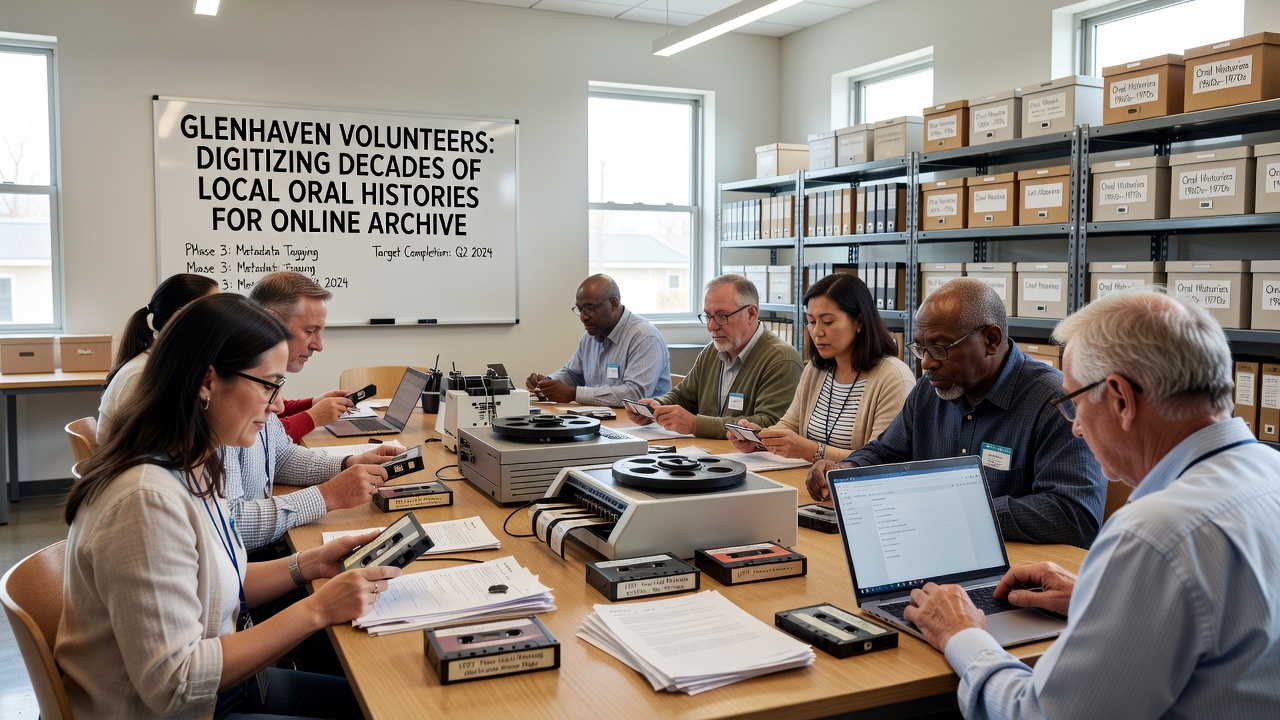
One volunteer who previously worked in broadcast engineering developed a workflow that batches similar tape formats together, which reduces setup time and allows newer participants to focus on transcription verification rather than technical adjustments.
Community Involvement and Training
More than 35 residents have participated since the project started, and participants range from high school students earning service hours to retirees who remember some of the original interview subjects, and training sessions cover both equipment operation and basic copyright considerations for public release.
Local libraries supplied space for secure storage during transfer work, while a nearby community college provided temporary access to higher-capacity servers for initial file backups before the material moves to the permanent online platform.
Technical Standards and Accessibility
Files are encoded in uncompressed WAV format for preservation masters and MP3 derivatives for public streaming, and each entry includes time-stamped transcripts that users can search by keyword or browse by decade, and the archive platform incorporates captioning tools to support users who prefer text over audio playback.
According to resources from the Library of Congress National Recording Preservation Board, similar community projects have demonstrated that consistent metadata practices improve long-term discoverability, and Glenhaven organizers adopted those recommendations early in their planning.
Timeline and November 2026 Milestone
The volunteer group set an internal target to complete transfer of the entire collection by summer 2026, and they plan a public launch of the online archive in November 2026 that will coincide with the town's annual heritage festival, allowing residents to explore the material during community events.
Progress updates shared at town council meetings show that roughly 60 percent of the recordings have completed the transfer stage as of late 2025, with quality control reviews occurring on a rolling basis to catch any issues before files receive final catalog numbers.
Broader Context and Partnerships
Observers note that comparable oral history digitization efforts have taken place in other mid-sized communities across North America and Australia, and Glenhaven participants consulted documentation from the National Library of Australia on handling fragile media formats before finalizing their own procedures.
Partnerships with regional genealogy societies have supplied additional context for identifying unnamed speakers on some older tapes, and these collaborations have also generated interest in expanding the archive with new interviews recorded on modern equipment once the legacy collection is online.
Conclusion
The completed digital collection will provide researchers, students, and residents with searchable access to primary source material that documents Glenhaven's social and economic development across seven decades, and the volunteer model demonstrates how sustained local participation can preserve audio heritage that might otherwise remain inaccessible due to format obsolescence.
Future phases may incorporate user-submitted corrections to transcripts and additional recordings from recent community events, which would extend the archive's coverage while maintaining the same technical standards established during the initial transfer work.